Cambodia in a Week: Angkor Temples, Tonlé Sap and Phnom Penh
By Ganesh ·

A one-week Cambodia route: sunrise at Angkor Wat, the stone faces of the Bayon and the jungle-wrapped Ta Prohm, a floating village on the Tonlé Sap, and Phnom Penh's palaces and history, with tips on seasons, temple dress and visas.
Few places on earth match the scale and atmosphere of Angkor, the vast complex of temples built by the Khmer Empire between roughly the 9th and 15th centuries. Add the great lake of the Tonlé Sap and the riverside capital Phnom Penh, and you have a week that mixes wonder, history and some of Southeast Asia's warmest hospitality. Here is how we would plan a first visit.

When to go
Cambodia is tropical and warm all year, with two broad seasons:
- Dry season (roughly November to April): the most popular time. November to February is the coolest and most comfortable stretch; March to May becomes very hot.
- Wet season (roughly May to October): rain usually falls in short, heavy afternoon bursts rather than all day. The countryside turns green, moats and reservoirs fill, crowds thin and the Tonlé Sap swells dramatically.
Major holidays such as Khmer New Year in mid-April and the Water Festival around October or November are lively but busy; book ahead if your dates overlap.
A 7-day Cambodia itinerary
Day 1: Arrive in Siem Reap
Siem Reap is the base for Angkor. Settle in, buy your Angkor pass from the official ticket office or its official online channel (passes come in single- and multi-day versions; check current options there), and spend the evening around the Old Market and the riverside.
Day 2: Angkor Wat and Angkor Thom
Rise early for sunrise at Angkor Wat, the largest religious monument in the world, originally dedicated to Vishnu and later a Buddhist temple. Take time with the long bas-relief galleries, including the famous Churning of the Ocean of Milk. Later, enter the walled city of Angkor Thom to see the Bayon, with its dozens of towers carved with serene, smiling stone faces, then the Baphuon and the Terrace of the Elephants.
Day 3: Ta Prohm and the Grand Circuit
Visit Ta Prohm early, before the heat and crowds. Here giant silk-cotton and strangler fig roots grip the ruins, left much as early explorers found them. Continue to Banteay Kdei and the Sras Srang reservoir, then follow the Grand Circuit to Preah Khan and the island temple of Neak Pean.
Day 4: Banteay Srei and the Tonlé Sap
Drive out to Banteay Srei, a small 10th-century temple of pink sandstone with some of the finest carving at Angkor. In the afternoon, visit a village on the Tonlé Sap, Southeast Asia's largest freshwater lake. In the wet season the river feeding it reverses its flow and the lake expands many times over, so stilted houses that tower above dry land in March sit just above the water in October. Choose a community-based or responsible tour, as some floating-village trips are notorious for pressure sales.
Day 5: Travel to Phnom Penh
Travel to the capital by road, a long but scenic day through rice country, or take a short domestic flight. In the evening, walk the riverside promenade where the Tonlé Sap meets the Mekong.
Day 6: Phnom Penh's palaces and museums
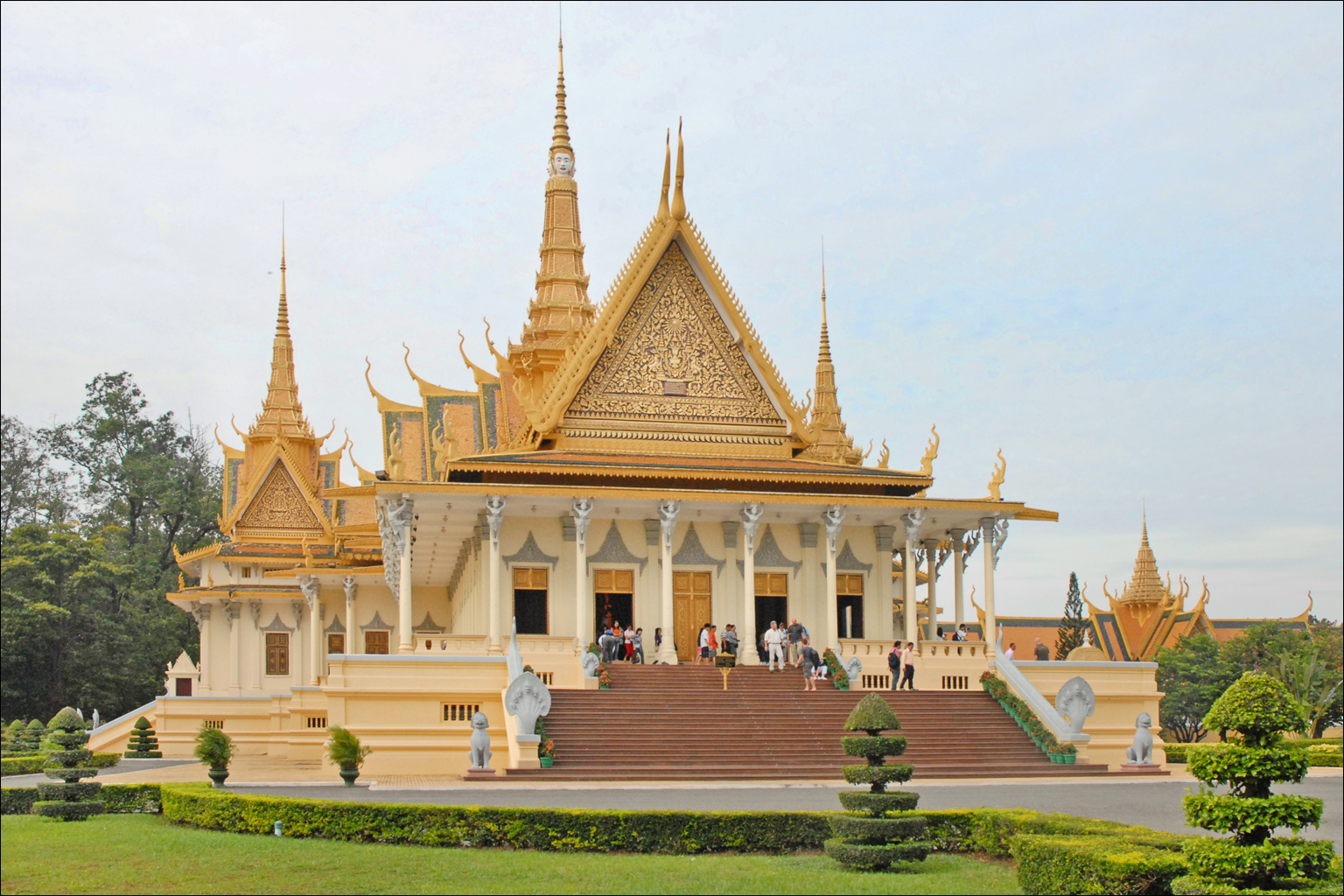
See the Royal Palace and the Silver Pagoda, named for its floor of silver tiles, then the National Museum, whose collection of Khmer sculpture puts Angkor in context. Browse the Central Market or the Russian Market for crafts and fabric.
Day 7: Remembering recent history
Spend a reflective morning at the Tuol Sleng Genocide Museum, a former school used as the S-21 prison under the Khmer Rouge, and the memorial at Choeung Ek, outside the city. Audio guides help tell the story with care. These are places of mourning, so dress and behave respectfully.
With more time, add Battambang for countryside and bamboo-train history, or Kampot and Kep on the south coast for pepper farms and seafood.


Respectful temple dress and behaviour
- Cover shoulders and knees at Angkor and at active pagodas. The upper level of Angkor Wat in particular enforces a dress code. A light scarf or long, airy trousers solve this in the heat.
- Remove shoes and hats when entering shrines and prayer halls.
- Do not climb on fragile carvings or sit on statues, and respect closed-off areas.
- Women should avoid touching monks or handing objects directly to them.
- Avoid pointing your feet at people or Buddha images, and ask before photographing people.
Visa and entry basics
Many visitors need a visa for Cambodia, and rules, fees and eligible entry points change over time. Check the official Cambodian government e-visa site and your own government's travel advice before you go. Be careful of lookalike websites that charge extra fees; only apply through the official portal.
Getting around
- At Angkor, the classic way to explore is by tuk-tuk with a driver for the day; bicycles and e-bikes suit the cooler months. Licensed guides add a great deal of context.
- Between cities, buses and minivans are common, and domestic flights save time.
- In Phnom Penh, tuk-tuks and ride-hailing apps are easy; agree on a price first if not using an app.
Practical tips
- US dollars are widely used alongside the Cambodian riel; small change often comes back in riel.
- Start temple days at dawn, rest at midday and return for late afternoon light.
- Carry water, sunscreen, a hat and insect repellent.
- Stick to marked paths in rural areas; landmine clearance has made huge progress, but caution remains wise off the beaten track.
- Try fish amok (a fragrant coconut curry steamed in banana leaf), lok lak and Kampot pepper dishes.
Plan it in Sancharees
Create your trip in Sancharees and add each temple and stop to its day, from Angkor Wat at sunrise to the Phnom Penh riverside. Forward your flight and hotel confirmation emails to your booking inbox and they will land on the right days. Share the trip with your travel companions so everyone is on the same page.
Photos: Angkor Wat reflected in its pond by Bjørn Christian Tørrissen, CC BY-SA 4.0 · Ta Prohm temple, Angkor by Supanut Arunoprayote, CC BY 4.0 · The Bayon, Angkor Thom by Diego Delso, CC BY-SA 3.0 · Banteay Srei temple by Tsui, CC BY-SA 3.0 · Tonlé Sap lake by Deror_avi, CC BY-SA 3.0 · Royal Palace, Phnom Penh by Jean-Pierre Dalbéra from Paris, France, CC BY 2.0 (Wikimedia Commons)


Read in: এক সপ্তাহে কাবিবিয়া: অ্যাংকর মন্দির, টনলে স্যাপ ও ফেনম পেন · Kambodscha in einer Woche: Angkor-Tempel, Tonlé Sap und Phnom Penh · Camboya en una semana: los templos de Angkor, el Tonlé Sap y Phnom Penh · Le Cambodge en une semaine : temples d'Angkor, Tonlé Sap et Phnom Penh · एक हफ़्ते में कंबोडिया: अंगकोर के मंदिर, तोनले साप और नोम पेन्ह · 1週間のカンボジア:アンコール寺院、トンレサップ、プノンペン · ಒಂದು ವಾರದಲ್ಲಿ ಕಂಬೋಡಿಯಾ: ಅಂಗ್ಕೋರ್ ದೇವಾಲಯಗಳು, ಟೋನ್ಲೆ ಸಾಪ್ ಮತ್ತು ಫ್놂ಂ ಪೆನ್ · ഒരാഴ്ച കംബോഡിയയിൽ: അങ്കോർ ക്ഷേത്രങ്ങൾ, ടോൺലെ സാപ്, നോം പെൻ · कंबोडिया एका आठवड्यात: अंगकोर मंदिरे, टोन्ले साप आणि फ्नॉम पेन्ह · ஒரு வாரத்தில் கம்போடியா: அங்கோர் கோயில்கள், தோன்லே சாப், நோம் பென் · వారంలో కంబోడియా: అంగ్కోర్ దేవాలయాలు, టోన్లే సాప్ మరియు ఫ్నోమ్ పెన్